
Market Calculator
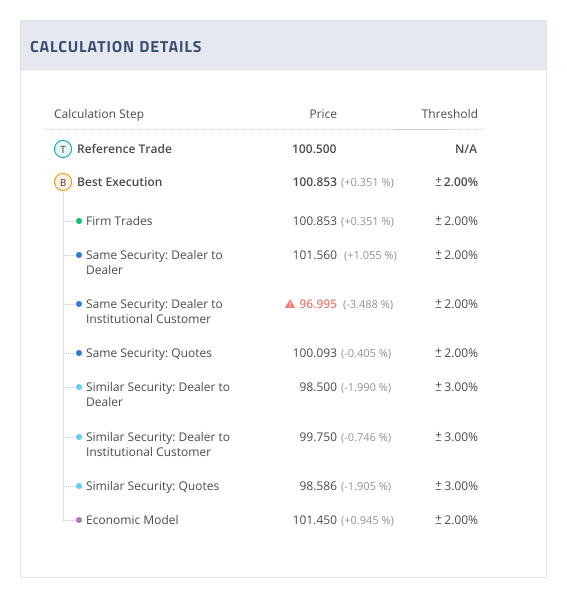
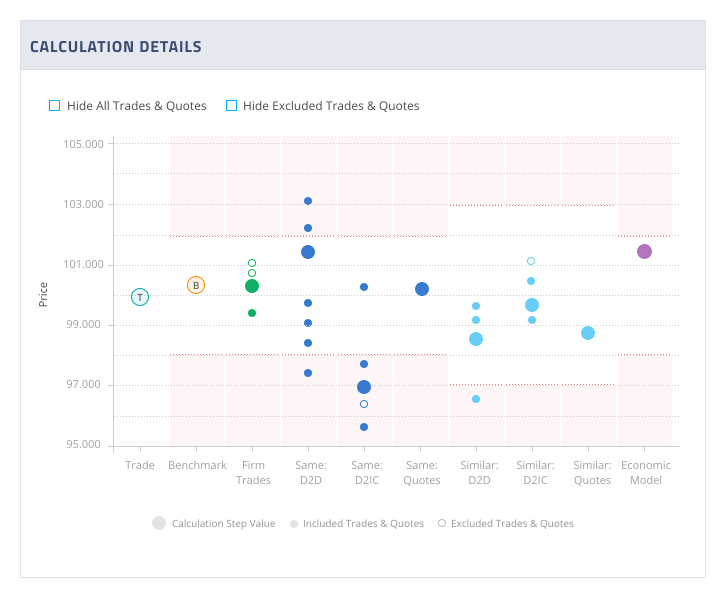
Pre-trade price confidence is essential to every fixed income transaction – buying, selling and bidding any bond. From Markup/Fair Pricing to Best Execution, the Effi Market Calculator enables users to examine and capture market conditions prior to executing the trade.
The Effi Market Calculator provides both price confidence and execution efficiency, and:
- incorporates market data and utilizes the prevailing market price waterfall process,
- enables each firm to calibrate multiple measurement types, using 20-plus settings, to more precisely meet their firm’s use cases and assumptions,
- includes the algorithmic measurement for side-of-market and bid-offer spread adjustments by individual security or sector,
- provides on-demand calculated values for up to five securities, each with up to 8 relevant market observations, and
- supports compliance and regulatory requirements by archiving calculations and their underlying market data.
The engine empowers users to fine-tune each category of market observations to support specific regulatory requirements.
Enhanced
The Effi Market Calculator leverages our proprietary calculation engine and is powered by:
- QTradesTM (side of market adjustments)
- QCurvesTM (yield curve adjustments)
- QScoresTM (comparable bonds)
Archived
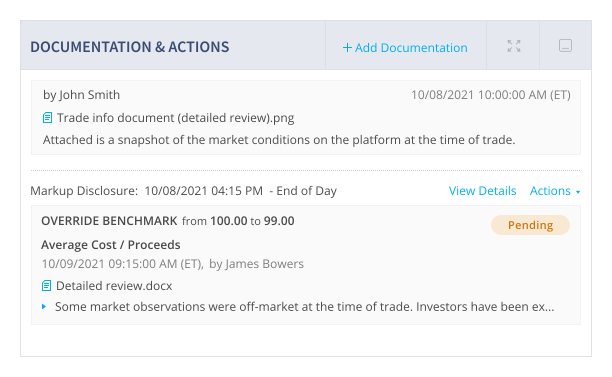
Calculations and supporting data can be archived with the option of attaching pre-trade documentation and notes. Saved calculations can be retrieved and exported for further analysis or regulatory inquiries.
Trade Oversight
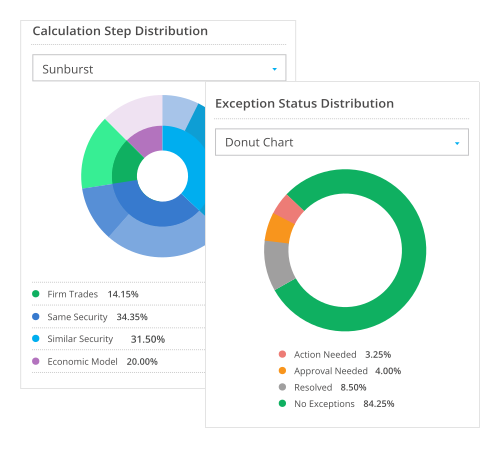
From Markup/Fair Pricing to Best Execution, Effi’s Trade Oversight Module provides a robust trade monitoring and surveillance process, comparing your trades to current market conditions. Configurable exception handling, reporting, and analytics provide insights that answer business questions and support responses to regulatory inquiries.
Effi leverages the prescribed prevailing market price waterfall process and provides benchmark calculations, values, and supporting data.
Effi Trade Oversight provides a sophisticated yet simple trade monitoring and surveillance process that:
- provides configurable processes for Markup Monitoring & Disclosure, Fair Pricing, and Best Execution,
- enables multiple measurement types to support requirements for different workflows,
- offers customizable exception handling, reporting, and analytics, and
- archives all calculations, supporting data, and exception handling details.
Flexible
Effi’s solution for Markup/Fair Pricing is an unbiased approach to the PMP waterfall that provides a quantitatively precise, repeatable, and defendable PMP value, as defined in MSRB Rule G-30.06 and FINRA Rule 2121.01 and .02.
Customizations to benchmark settings, thresholds, and exception handling permits users to configure a solution tailored to their Best Execution objectives.
Enhanced
The Effi Market Calculator leverages our proprietary calculation engine and is powered by:
- QTradesTM (side of market adjustments)
- QCurvesTM (yield curve adjustments)
- QScoresTM (comparable bonds)
Archived
Calculations, supporting data, and exception handling details are archived. Information can be retrieved and exported for further analysis or regulatory inquiries.
Transaction Quality Analysis
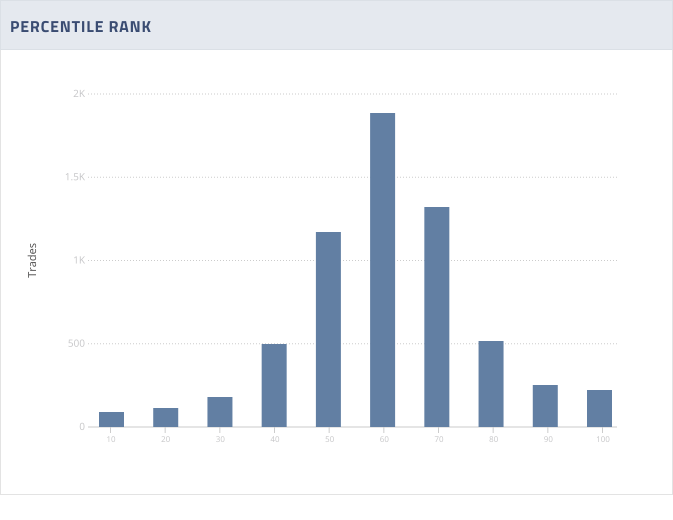
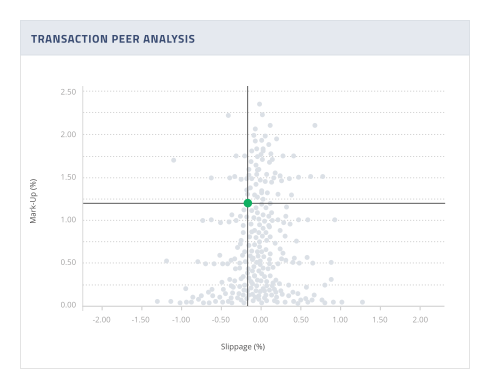
BondWave’s TQA solution brings clarity to fixed income execution by helping trading teams understand the true cost of trades and how they compare to relevant market peers. Powered by proprietary QMarksTM data, TQA calculates total trade cost – including mark-up and slippage – and benchmark performance using peer-based comparisons and percentile rankings.
For years, transaction cost analysis has largely been treated as a compliance exercise focused on reporting outcomes, but that approach leaves real performance insight on the table. Trading desks that think differently are using execution data to sharpen decisions, not just review them. TQA is built for that shift – turning post-trade analysis into a continuous feedback loop that improves decision-making over time.
Watch our TQA video here.
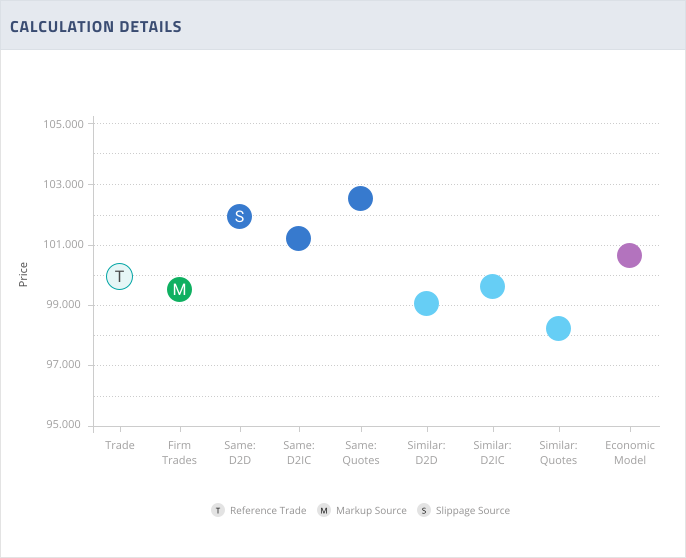
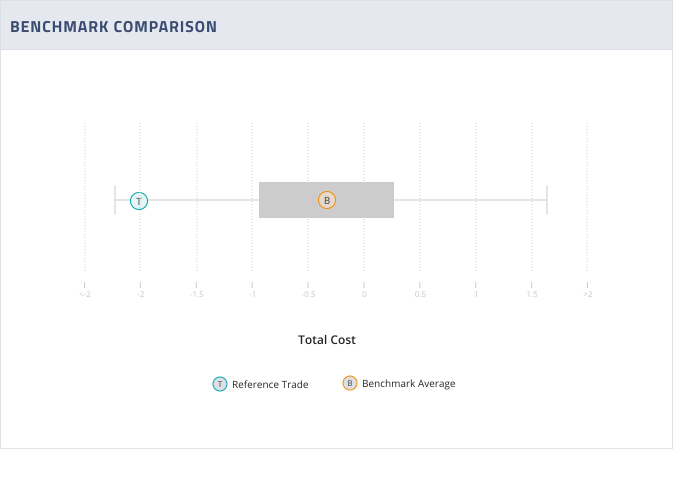
Delivered directly within the Effi platform, TQA highlights execution patterns across trades and counterparties, showing where pricing is efficient, where value is being lost, and how results compare across similar market activity. This enables firms to benchmark execution against real market conditions, evaluate counterparties, and refine trading decisions without disrupting existing workflows.
For Buy-Side Firms
Buy-side trading teams use TQA to move beyond compliance-driven reporting and toward execution improvement. By benchmarking trades against true market conditions and peer activity, firms can identify hidden execution costs, evaluate dealer performance, and uncover consistent pricing advantages.
Key Benefits:
- Benchmark execution quality against peer-based market data and real market conditions
- Identify execution drag and slippage at the trade level
- Evaluate counterparty and dealer performance more effectively
- Spot execution patterns that impact performance over time
- Improve trading outcomes through continuous feedback loops
Read our case study here.
For Sell-Side Firms
Sell-side firms use TQA to gain transparency into execution quality and better understand how their pricing and liquidity provision perform in the context of the broader market. This helps trading desks identify strengths, correct inconsistencies, and demonstrate execution quality more effectively to clients.
Key Benefits:
- Measure performance relative to peer execution benchmarks
- Identify counterparties and flow characteristics driving outcomes
- Understand execution patterns that influence client results
- Improve pricing consistency and competitiveness
- Demonstrate execution quality with objective, peer-based analytics